CULTURE

蔭油文化


What is Taiwanese Yimyu?
- Yimyu is a type of soy sauce made via whole-bean fermentation, with no wheat or wheat-related ingredients used in any part of the process.
- It is gluten-free, making it suitable for people with celiac disease or gluten intolerance.
- It can be brewed in any kind of vessel.
- Its flavor is attained via a process called solar fermentation, in which the mixture is exposed to the sun for 120 days or more.
- In one method, the mixture goes through an additional step known as post-fermentation reduction, in which case it only requires 21–30 days of sun exposure.
The Culture of Taiwanese Yimyu
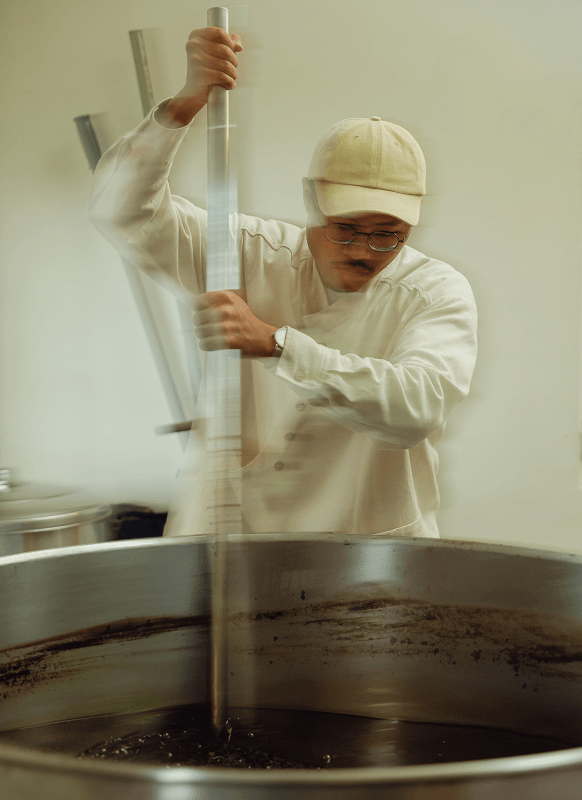
My name is Hsieh Yi-Che. I am a soy-sauce maker – someone who brews soy sauce. What makes my work a bit more special, however, is that I produce soy sauce using a traditional brewing method invented right here in Taiwan. This method uses whole beans that go through koji fermentation, koji washing, and solar fermentation. The type of soy sauce produced by this method is known as yimyu.
The process of brewing yimyu is intricate, time-consuming, and physically demanding. But every time I lift the lid on a new jar of yimyu and taste a drop of the resulting mixture, that beautiful balance of salty and umami flavors instantly makes me forget about all the hard work and exhaustion. Perhaps that's simply because I love good food!
However, when I first began selling my product, I realized that most consumers had grown accustomed to the flavor of mass-produced soy sauce. In fact, they were unfamiliar with the flavor of yimyu, which has existed in Taiwan for over a century.
This realization struck me deeply. It takes four to six months to brew a bottle of soy sauce, which sounds like a long time. But what's even more difficult is changing the culture of an entire industry. Building a culture around Taiwan's yimyu, I thought, would take twenty years or more of sustained effort.
So, I realized: the sooner I get started, the better.
A Narrow Definition
I have to be honest: in the past, my understanding of traditional yimyu was pretty narrow. This was due to the limitations of my own experience. From my father, who taught me to make yimyu, to the twelve local yimyu breweries I documented in 2016, everyone – without exception – used the same process: black beans, clay jars, and long periods of solar fermentation. Because of this, I didn't realize that the needs of modern yimyu production had already changed dramatically.
It may be that this narrow view of yimyu production is hindering the growth of the entire industry. I believe that we need to approach things with a more open perspective.

'Yim' Refers to a Method
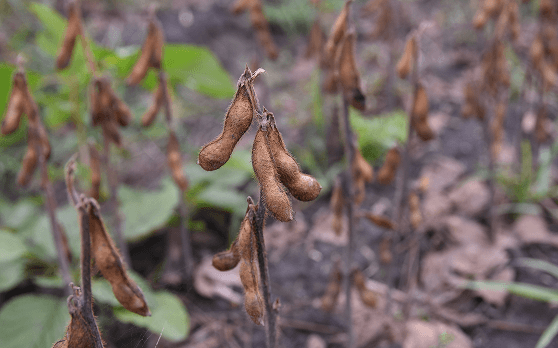
As I continued visiting soy sauce breweries across Taiwan, I became familiar with Pingtung's King Do You soy-sauce brand, which uses yellow soybeans to make yimyu. Later on, I discovered May Dong Traditional Handmade Sauces, which does the same thing for some of their products. This made me realize that the 'yim' in 'yimyu' refers to the brewing method, and has nothing to do with the type of bean you use.
In Taiwanese Hokkien, 'yim' (or 'him' as a verb) means 'to mature something by heating it up in a sealed environment.' So, we need to move away from the idea that yimyu can only be brewed using black beans, and instead think of it as 'a soy sauce made with whole soybeans,' whether they're black or yellow.
Today, yimyu is broadly understood as a type of soy-sauce made using solar fermentation.
Brewing Vessels
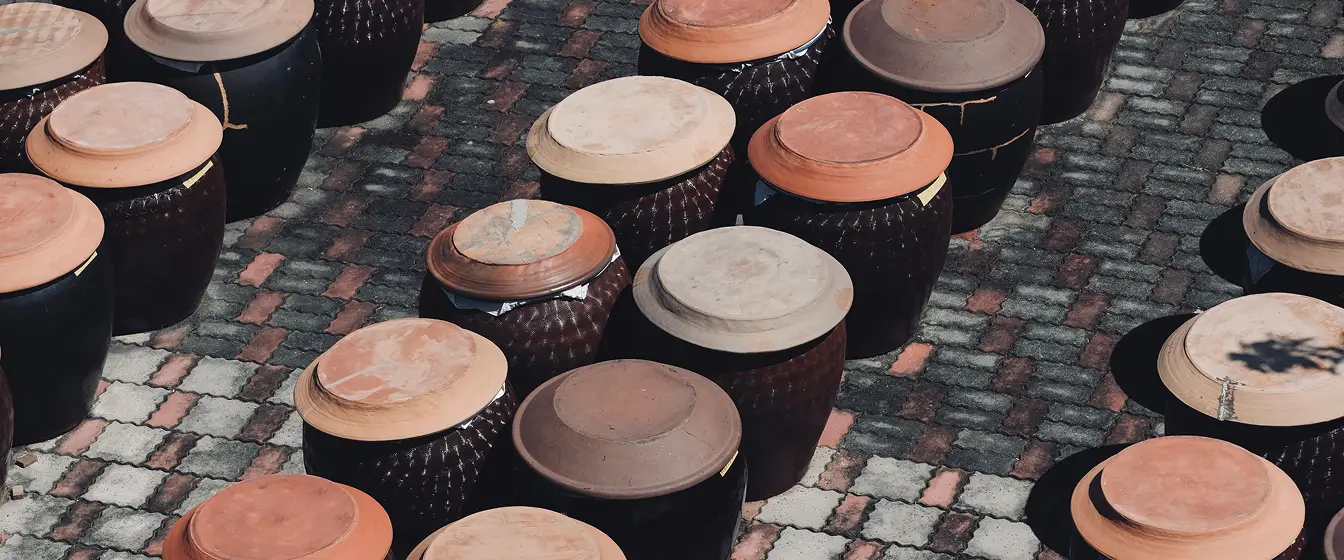
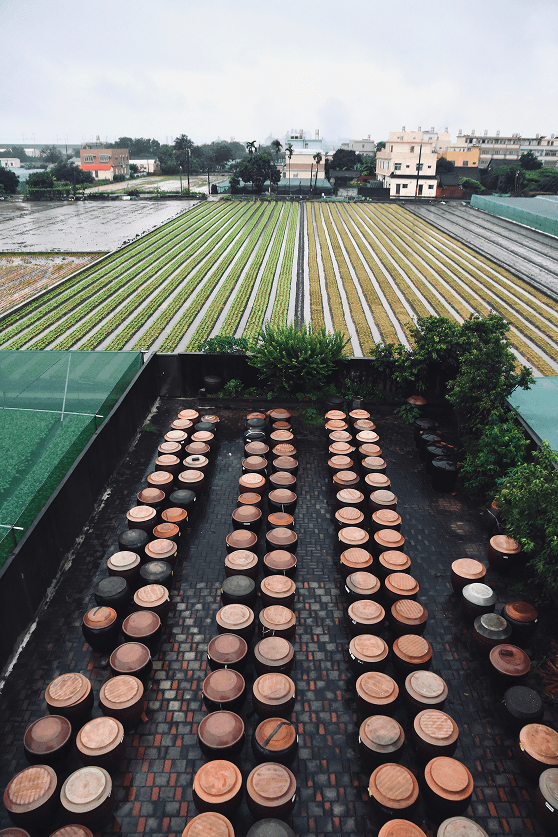
In the past, I thought that something had to be brewed in earthen jars to be called 'yimyu.' But the reality is that Taiwan can no longer sustain the production of large ceramic jars.
As far as I know, only the Tong Luo Kiln in Miaoli is still producing these large clay jars today. So, if we continue to insist that jar brewing is the only legitimate way to make yimyu, we'll be constraining its future development.
Nowadays, the traditional 20-24 dou jars have all but disappeared. There are two reasons for this:
- The decline of the traditional fermentation market has made jar-making economically unviable.
- The craft itself is labor-intensive, technically demanding, and costly - younger generations have little interest in taking it on.
This is not to deny the value of jar-brewed yimyu – quite the opposite, in fact. It's precisely because jar-brewed yimyu is so rare nowadays that it will only become more precious in the future. If we can establish jar-brewed yimyu as a separate grading category, it'll make the taxonomy of Taiwanese yimyu richer and more layered.



The Duration of Solar Fermentation
Many of the breweries I've visited in the past brew their soy sauce in the sun for at least four months. Although yimyu from Yilan undergoes just 21 days' solar fermentation, I used to think that this was an exception. That was until I met Huang Tung-yen from Daojiang Soy Sauce, who helped me understand what's known as post-fermentation reduction.
Yilan's sunny period only lasts from the Dragon Boat Festival to the Mid-Autumn Festival – the rest of the year, the weather is rainy and overcast. This means that locally brewed yimyu can only ferment in the sun for a period of 21 days. Because of this, the flavor maturation process relies on prolonged heating, or 'post-fermentation reduction.'
What's even more special is that, around the 14th day, cooked glutinous rice is added to aid fermentation. After 21 days, the soy liquid is extracted and heated until it turns red, and sugar crystals or maltose are added. When a thin layer of salt crystals forms on the surface of the liquid, the yimyu is complete. Its flavor is light yet distinctive, and its production process is no less complex than that of longer-aged soy sauces.
So, the duration of the solar fermentation process isn't what's important. What matters is the method of flavor maturation – whether it's achieved entirely through fermentation or through post-fermentation reduction.
The Advantages of Taiwanese Yimyu
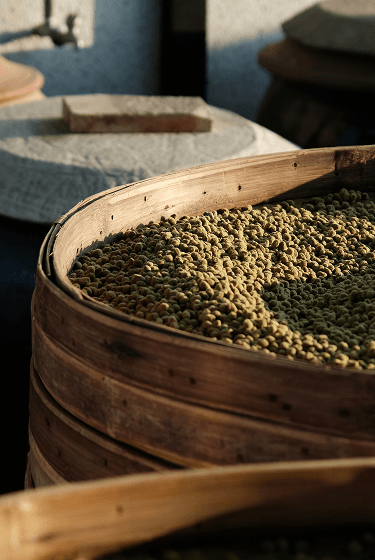
Taiwan's yimyu is fermented using whole soybeans. Once broken down, the soybeans' intact oils and proteins release ester-based aromas, which contribute to its resilience in slow-cooking. Because of this, the master stock used in Taiwanese stew is often made using yimyu. It also offers a much more rounded flavor than mass-produced soy sauces in Taiwan.
What's more, since the entire process is carried out without using wheat, it's suitable for individuals with gluten intolerance!
Taiwan’s culinary culture has been shaped by migration. It's been influenced by Chinese and Japanese brewing methods, but also by the local climate conditions. As a result, Taiwanese yimyu can be categorized into five major brewing styles, each with its own aroma. The diversity and depth of flavor found in Taiwanese yimyu are far greater than most people realize.
So, in fact, Taiwan doesn't need to envy Japan for its miso and soy-wheat sauces, nor Korea for its doenjang and kimchi, nor Europe for its olive oil and balsamic vinegar. Taiwan already possesses its own deep-rooted culinary heritage in the form of yimyu – a unique expression of the local terroir, and one which deserves recognition. True 'local flavor' need not be sought from afar – it already exists within our own daily lives.
蔭油歷史
HISTORY
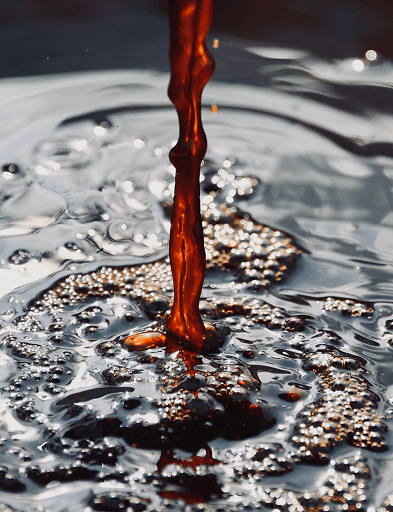
While we can't determine the exact origin of yimyu in Taiwan, the operation of certain yimyu breweries into their fifth or sixth generation of owners suggests that Taiwanese yimyu has been around for at least a century.
Today, Taiwanese yimyu can be categorized into five major brewing styles, resulting in a flavor profile even more diverse than that of Japan. As an island nation with a culture built on migration, Taiwan inherited yimyu from China – but its production methods have been influenced by Taiwan's local climate and Japan's soy sauce-making techniques.
It's said that yimyu was first introduced to the island during the Koxinga Dynasty. While Chinese soy sauce was universally made with yellow soybeans, Taiwan's yimyu relied on black soybeans as its main ingredient. During the koji inoculation process, rice bran was added to increase the fermentation surface area, and the process also involved a step known as 'yim.' This suggests that Chinese soy sauce underwent at least one stage of localization in Taiwan.
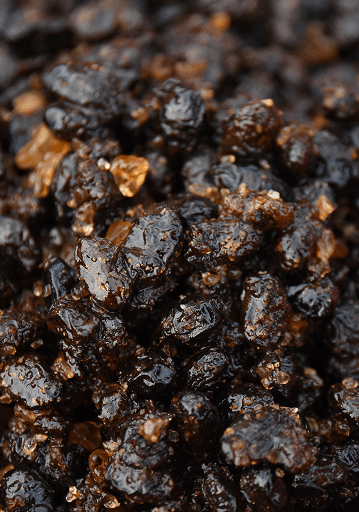
Through archival research, I discovered that Taiwan's dry fermentation method for making yimyu is almost identical to the process of making Fujian's Guantou soy sauce. The main differences between the two lie in their fermentation vessels and methods: with the Guantou method, the inoculated soybean koji is placed in wooden barrels for fermentation, without exposure to sunlight. By contrast, when making Taiwanese yimyu, the koji is sealed in earthenware jars which are then exposed to the sun for fermentation.
Both methods employ either black or yellow soybeans; however, historical records provide clear evidence that black soybeans were preferred in Taiwan for making soy sauce. According to The General History of Taiwan, Volume 27, "Black soybeans are sown in April or May and harvested in August or September. They produce a particularly sweet soy sauce and are also used for yanchi (fermented black soybeans)." From this, we can see that people in Taiwan were more accustomed to the flavor of black-bean soy sauce. Yellow soybeans are only mentioned once: "Yellow soybeans are round in shape and used for making tofu,” with no mention of soy sauce production. This suggests that yellow soybeans were reserved for making tofu.
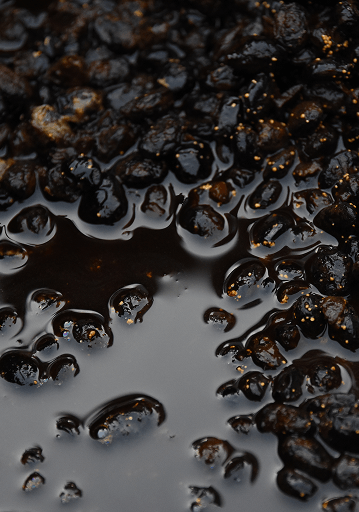
Dry-fermented yimyu is known for its captivating, mellow aroma. But it presents a major concern for all yimyu makers: the raw sauce yield from dry fermentation is extremely low, and this has a direct impact on brewers' incomes. It's theorized, then, that wet fermentation arose out of economic necessity, modifying the process to incorporate brine.
Today, wet fermentation is the dominant method among Taiwanese yimyu producers, accounting for more than half of total production. It's worth mentioning that, among all the fermentation methods used in Taiwan, only dry and wet fermentation produce a unique byproduct known as jar-bottom yimyu. This occurs because the concentration of soybeans in the earthenware jars is so high that the mixture cannot be stirred during solar fermentation (this process is also known as static fermentation). As a result, the soy sauce separates into upper and lower layers, with the layer closest to the bottom possessing the purest aroma.
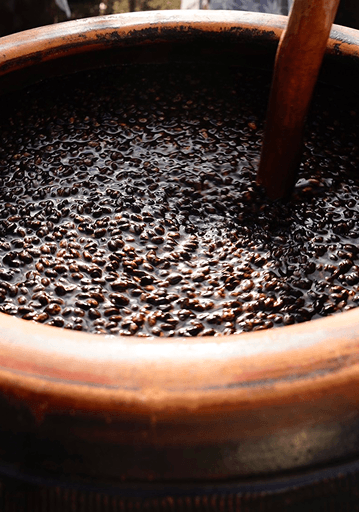
In 1895, Taiwan was ceded to Japan. Under the subsequent fifty years of Japanese governance, yimyu production was heavily influenced by Japanese soy sauce brewing techniques, leading to the development of the double-fermentation method. It is well established that this was modeled after Japan’s saishikomi shoyu ('twice-brewed soy sauce') technique.
As for water-based fermentation, this method was arrived at through two separate developmental routes, distinguished by the practice of rinsing the koji prior to fermentation. Koji-rinsing was an outgrowth of Taiwan's dry-fermentation method, differing only in that more brine was added – enough to allow the koji to be stirred, unlike in the dry process.
Meanwhile, methods that do not involve rinsing the koji more closely resemble the Japanese tamari shoyu production method, or that of Hui'an Soy Sauce made in Quanzhou City, in China's Fujian Province. However, after Japan launched the Pacific War in 1941, material shortages in Taiwan and the soaring cost of wheat led brewers to omit wheat and related ingredients altogether. This adaptation ultimately gave rise to what is now recognized as water-fermented yimyu – one of the most common forms of Taiwanese yimyu today.
Today, wet fermentation is the dominant method among Taiwanese yimyu producers, accounting for more than half of total production. It's worth mentioning that, among all the fermentation methods used in Taiwan, only dry and wet fermentation produce a unique byproduct known as jar-bottom yimyu. This occurs because the concentration of soybeans in the earthenware jars is so high that the mixture cannot be stirred during solar fermentation (this process is also known as static fermentation). As a result, the soy sauce separates into upper and lower layers, with the layer closest to the bottom possessing the purest aroma.
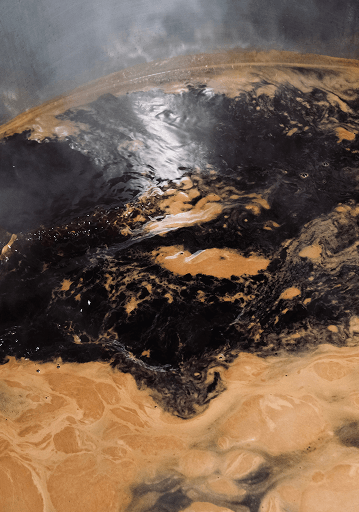
In Taiwan, the regions north of Taichung receive relatively little direct sunlight, and thus primarily adopt the water fermentation method. However, in Yilan and areas north of Hsinchu, frequent rainfall during winter and spring drastically shortens the period of time available for solar fermentation, which is essential for developing flavor.
To address this problem, yimyu producers in northern Taiwan’s rain-prone regions developed what is now known as the 'post-fermentation reduction' method. This approach compensates for limited sunlight by relying on extended post-fermentation heating and simmering to achieve a mature flavor. In doing so, it effectively resolves the problems of limited sun-exposure and insufficient fermentation, which results in a lack of flavor. This allows northern producers to maintain the quality and distinct character of Taiwanese yimyu.

From a purely commercial standpoint, tracing the origins of yimyu may seem unimportant. But in fact, Taiwan’s yimyu industry urgently needs a shared cultural foundation – a common point of origin – to build a unified understanding of its product.
After all, what is yimyu? The market is filled with inconsistent and fragmented information. Only when every producer within the industry holds a shared definition of what yimyu truly is can consumers begin to understand it as well. Once this collective understanding takes shape, the cultural and industrial identity of Taiwanese yimyu can finally begin to develop.
When that happens, the dream of building Taiwan’s yimyu into an international culinary brand will no longer be just a dream – it will be well within reach.
While we can't determine the exact origin of yimyu in Taiwan, the operation of certain yimyu breweries into their fifth or sixth generation of owners suggests that Taiwanese yimyu has been around for at least a century.
Today, Taiwanese yimyu can be categorized into five major brewing styles, resulting in a flavor profile even more diverse than that of Japan. As an island nation with a culture built on migration, Taiwan inherited yimyu from China – but its production methods have been influenced by Taiwan's local climate and Japan's soy sauce-making techniques.
It's said that yimyu was first introduced to the island during the Koxinga Dynasty. While Chinese soy sauce was universally made with yellow soybeans, Taiwan's yimyu relied on black soybeans as its main ingredient. During the koji inoculation process, rice bran was added to increase the fermentation surface area, and the process also involved a step known as 'yim.' This suggests that Chinese soy sauce underwent at least one stage of localization in Taiwan.
Through archival research, I discovered that Taiwan's dry fermentation method for making yimyu is almost identical to the process of making Fujian's Guantou soy sauce. The main differences between the two lie in their fermentation vessels and methods: with the Guantou method, the inoculated soybean koji is placed in wooden barrels for fermentation, without exposure to sunlight. By contrast, when making Taiwanese yimyu, the koji is sealed in earthenware jars which are then exposed to the sun for fermentation.
Both methods employ either black or yellow soybeans; however, historical records provide clear evidence that black soybeans were preferred in Taiwan for making soy sauce. According to The General History of Taiwan, Volume 27, "Black soybeans are sown in April or May and harvested in August or September. They produce a particularly sweet soy sauce and are also used for yanchi (fermented black soybeans)." From this, we can see that people in Taiwan were more accustomed to the flavor of black-bean soy sauce. Yellow soybeans are only mentioned once: "Yellow soybeans are round in shape and used for making tofu,” with no mention of soy sauce production. This suggests that yellow soybeans were reserved for making tofu.
Dry-fermented yimyu is known for its captivating, mellow aroma. But it presents a major concern for all yimyu makers: the raw sauce yield from dry fermentation is extremely low, and this has a direct impact on brewers' incomes. It's theorized, then, that wet fermentation arose out of economic necessity, modifying the process to incorporate brine.
Today, wet fermentation is the dominant method among Taiwanese yimyu producers, accounting for more than half of total production. It's worth mentioning that, among all the fermentation methods used in Taiwan, only dry and wet fermentation produce a unique byproduct known as jar-bottom yimyu. This occurs because the concentration of soybeans in the earthenware jars is so high that the mixture cannot be stirred during solar fermentation (this process is also known as static fermentation). As a result, the soy sauce separates into upper and lower layers, with the layer closest to the bottom possessing the purest aroma.
In 1895, Taiwan was ceded to Japan. Under the subsequent fifty years of Japanese governance, yimyu production was heavily influenced by Japanese soy sauce brewing techniques, leading to the development of the double-fermentation method. It is well established that this was modeled after Japan’s saishikomi shoyu ('twice-brewed soy sauce') technique.
As for water-based fermentation, this method was arrived at through two separate developmental routes, distinguished by the practice of rinsing the koji prior to fermentation. Koji-rinsing was an outgrowth of Taiwan's dry-fermentation method, differing only in that more brine was added – enough to allow the koji to be stirred, unlike in the dry process.
Meanwhile, methods that do not involve rinsing the koji more closely resemble the Japanese tamari shoyu production method, or that of Hui'an Soy Sauce made in Quanzhou City, in China's Fujian Province. However, after Japan launched the Pacific War in 1941, material shortages in Taiwan and the soaring cost of wheat led brewers to omit wheat and related ingredients altogether. This adaptation ultimately gave rise to what is now recognized as water-fermented yimyu – one of the most common forms of Taiwanese yimyu today.
Today, wet fermentation is the dominant method among Taiwanese yimyu producers, accounting for more than half of total production. It's worth mentioning that, among all the fermentation methods used in Taiwan, only dry and wet fermentation produce a unique byproduct known as jar-bottom yimyu. This occurs because the concentration of soybeans in the earthenware jars is so high that the mixture cannot be stirred during solar fermentation (this process is also known as static fermentation). As a result, the soy sauce separates into upper and lower layers, with the layer closest to the bottom possessing the purest aroma.
In Taiwan, the regions north of Taichung receive relatively little direct sunlight, and thus primarily adopt the water fermentation method. However, in Yilan and areas north of Hsinchu, frequent rainfall during winter and spring drastically shortens the period of time available for solar fermentation, which is essential for developing flavor.
To address this problem, yimyu producers in northern Taiwan’s rain-prone regions developed what is now known as the 'post-fermentation reduction' method. This approach compensates for limited sunlight by relying on extended post-fermentation heating and simmering to achieve a mature flavor. In doing so, it effectively resolves the problems of limited sun-exposure and insufficient fermentation, which results in a lack of flavor. This allows northern producers to maintain the quality and distinct character of Taiwanese yimyu.
From a purely commercial standpoint, tracing the origins of yimyu may seem unimportant. But in fact, Taiwan’s yimyu industry urgently needs a shared cultural foundation – a common point of origin – to build a unified understanding of its product.
After all, what is yimyu? The market is filled with inconsistent and fragmented information. Only when every producer within the industry holds a shared definition of what yimyu truly is can consumers begin to understand it as well. Once this collective understanding takes shape, the cultural and industrial identity of Taiwanese yimyu can finally begin to develop.
When that happens, the dream of building Taiwan’s yimyu into an international culinary brand will no longer be just a dream – it will be well within reach.
蔭油歷史
HISTORY

製醬工法
PROCESSING
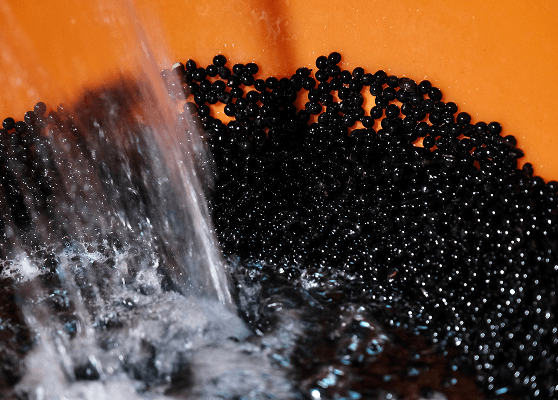
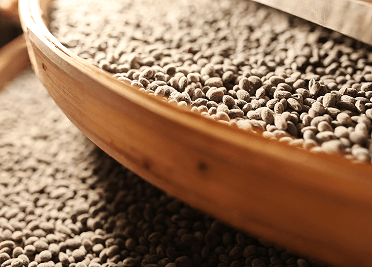
Soaking the Beans
Depending on the seasonal water temperature, the time needed to soak the beans may vary. However, the golden rule is that the beans should ideally absorb 60–80% of the water.
Steaming the Beans
If the beans absorb less than 60% water, they remain too firm after steaming; if they absorb more than 80%, they become mushy. Neither condition favors the growth of koji mold. Think of the beans as the soil and the koji as the crops – only good soil yields good harvests.
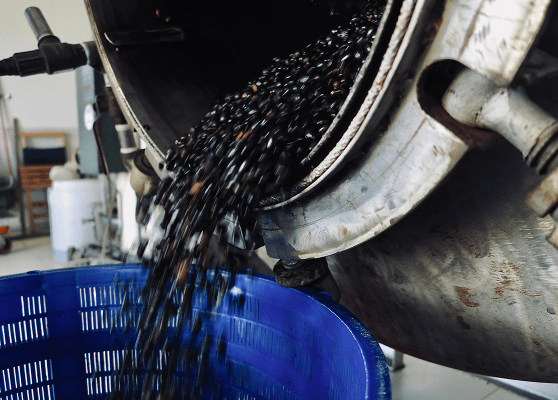
Cultivating the Koji
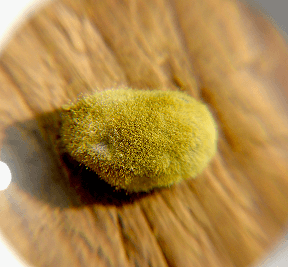
Caring for koji is not so different from caring for a child. The bean mash should be kept between 34–36°C. When the weather is cold, it should be covered with a blanket to retain warmth; when it’s hot and humid, it must be ventilated to cool it down. Ideally, the temperature should never exceed 38°C.
Turning the Koji
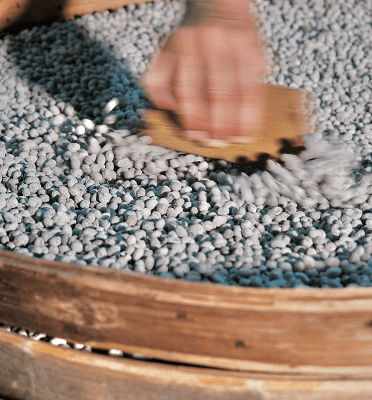
Gently turn the koji, taking care to avoid touching the mold growing on the surface. This process releases heat from the bottom layer – where it tends to accumulate – and increases humidity on the surface, both of which encourage healthy mold growth.
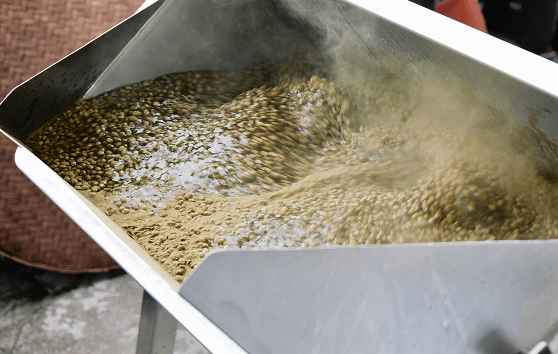
Washing the Koji
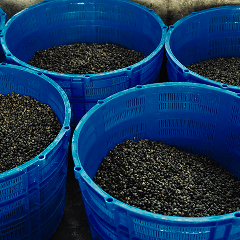
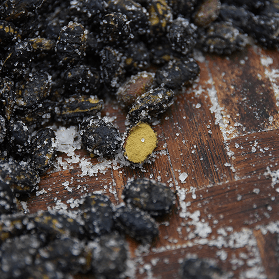
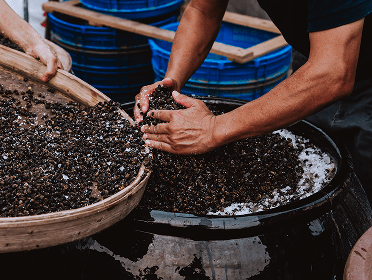
Because fermentation lasts for 4–7 days, by the end of the process, the koji mold will have already begun to age. Washing it with clean water reactivates the koji and restores its vitality.
Placement in Jars
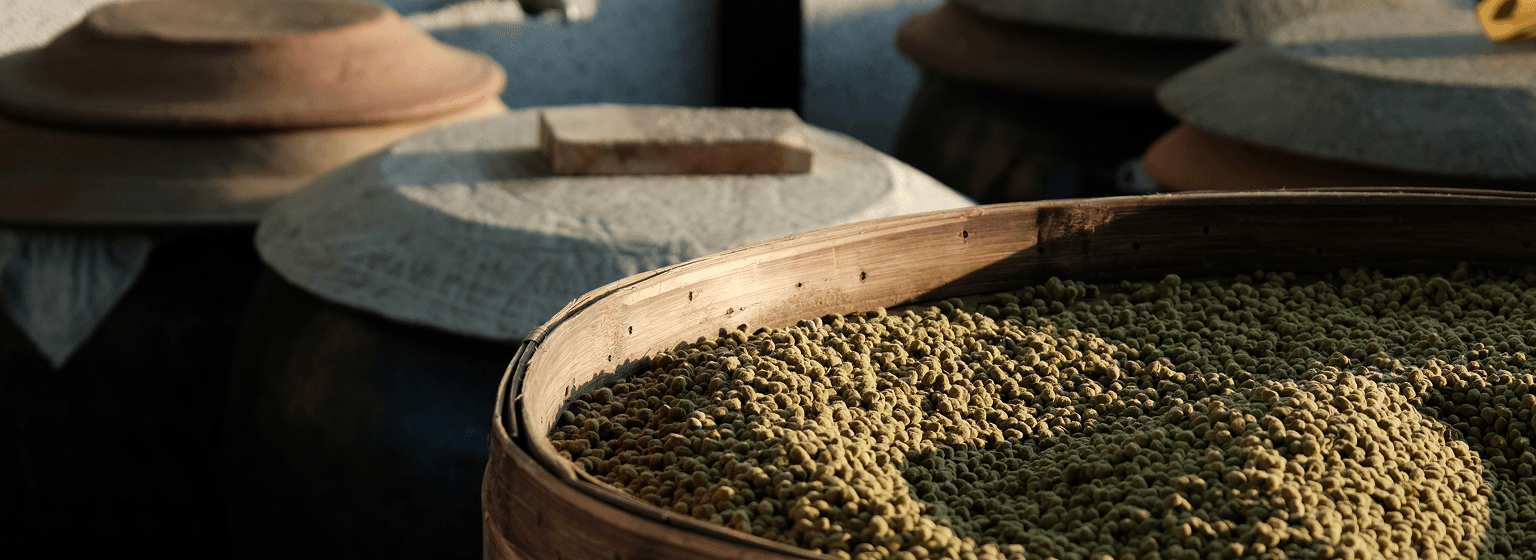
After washing, the koji is left to rest for 6–8 hours. Once its temperature rises to between 45 and 50°C, salt or brine is added depending on the brewing method. The mixture is then thoroughly stirred and placed in jars to begin fermentation.
Solar Fermentation
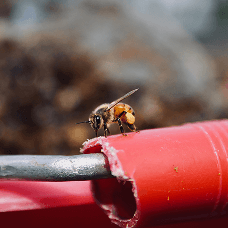
As an island nation, Taiwan is truly a paradise for soy-sauce brewing. Thanks to its ideal temperature and humidity, flavors that might take a full year to develop elsewhere can be achieved here in just four months.

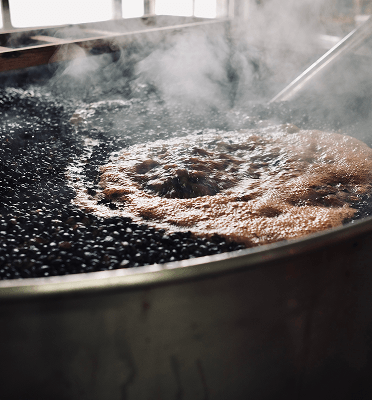
First Boil
Unlike Japanese soy sauces made from soy-and-wheat mash, Taiwanese yimyu is brewed entirely from whole beans. Its aroma comes primarily from esters, and only fully emerges when the sauce is brought to a boil.
Filtration
After the first boil, the mixture in the clay jar will contain both soy sauce and beans. To obtain the pure, clean yimyu, this mixture must be filtered through cloth to separate the sauce from the beans.
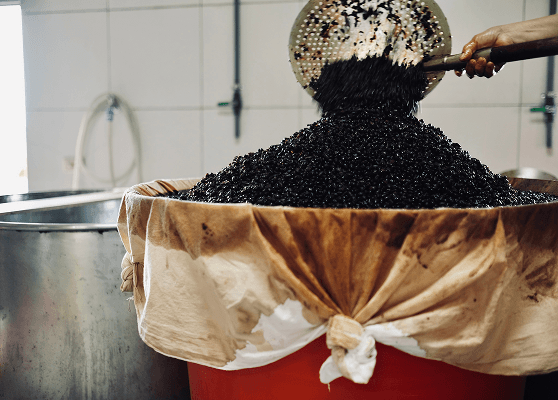
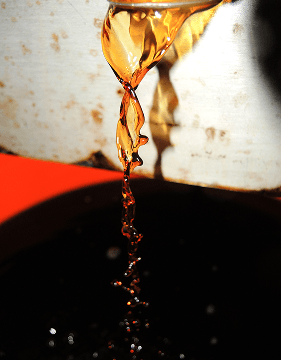
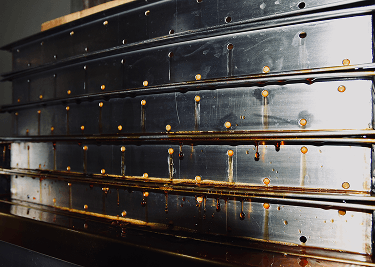
Pressing
To preserve every drop of this hard-earned sauce, the bean mash left in the filter – still rich with yimyu – is pressed to extract the remaining liquid.
Second Boil
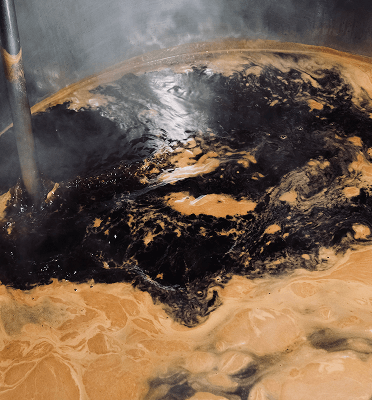
After combining the filtered and pressed yimyu, the mixture undergoes a second round of boiling. Sugar, flavor enhancers, or aromatic ingredients can be added at this stage to fine-tune the taste and create the desired flavor profile.
Final Filtration
During the second boil, some small particles or residue may appear from the additional seasoning. A final round of filtration ensures that the finished yimyu remains completely pure.

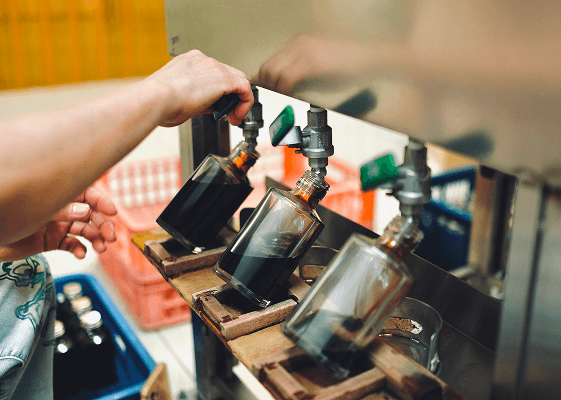
Bottling
The bottling process must take place in the cleanest area of the facility to prevent any impurities from contaminating the product.
Sterilization
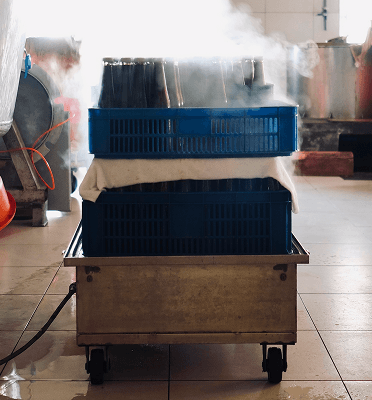
Yimyu is typically bottled in glass containers and pasteurized at around 80°C for 15 minutes. This method avoids the use of preservatives while allowing the sauce to be kept for over a year. However, once opened, it should be refrigerated.
Find on Map
Find by Recipe